













March 05,2026
The 13th Meeting of the Consortium for the Control of Zoonoses
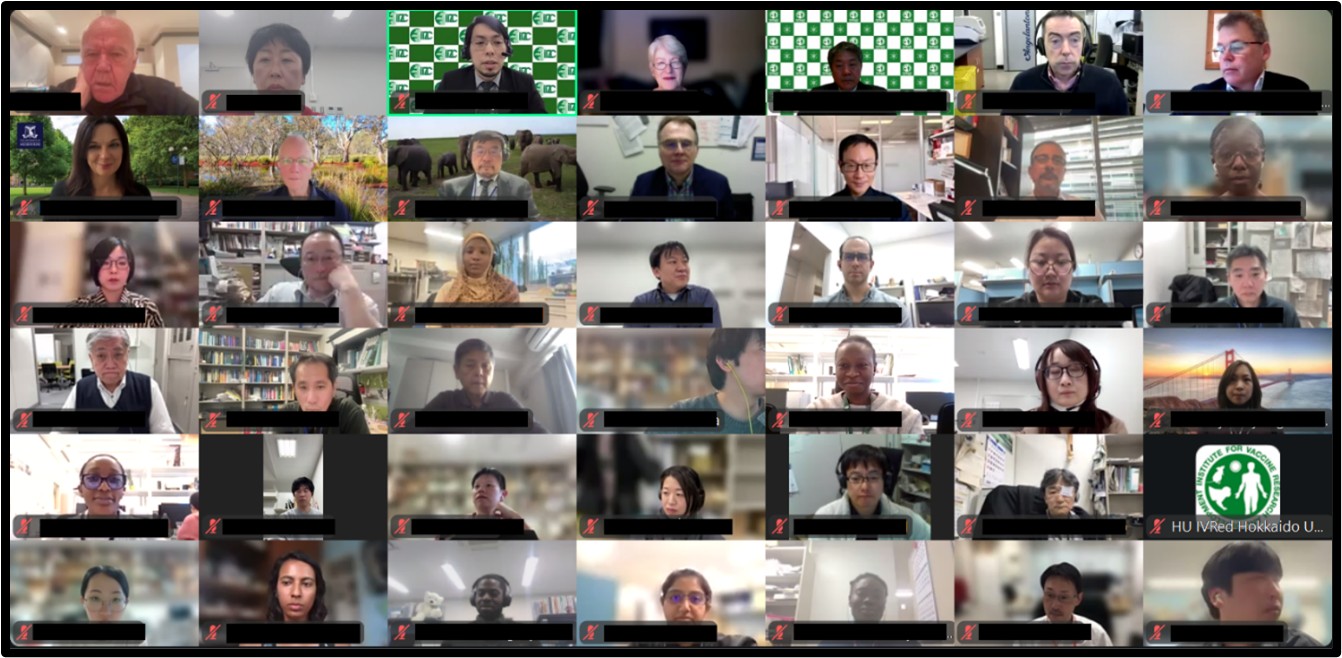
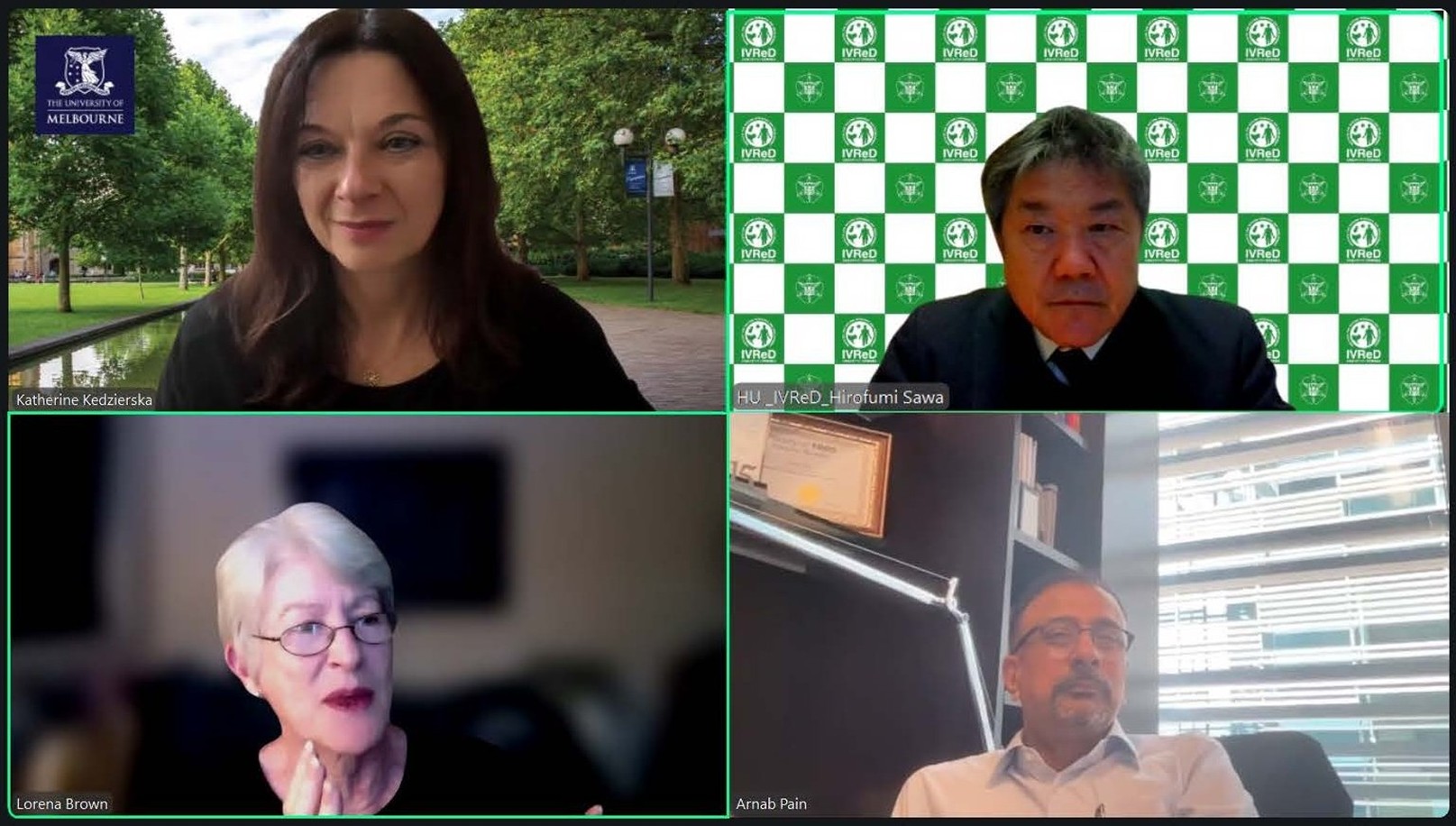
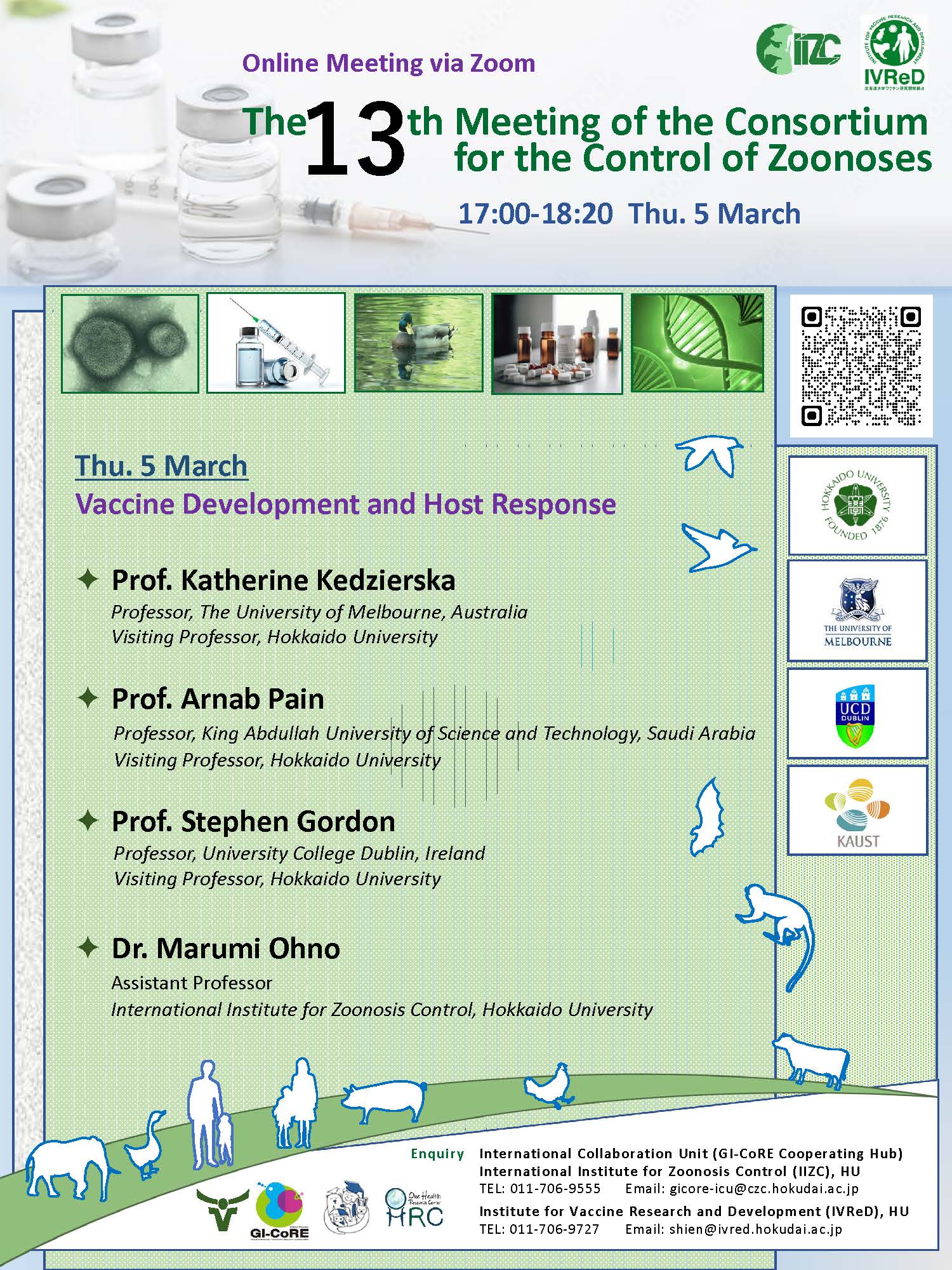
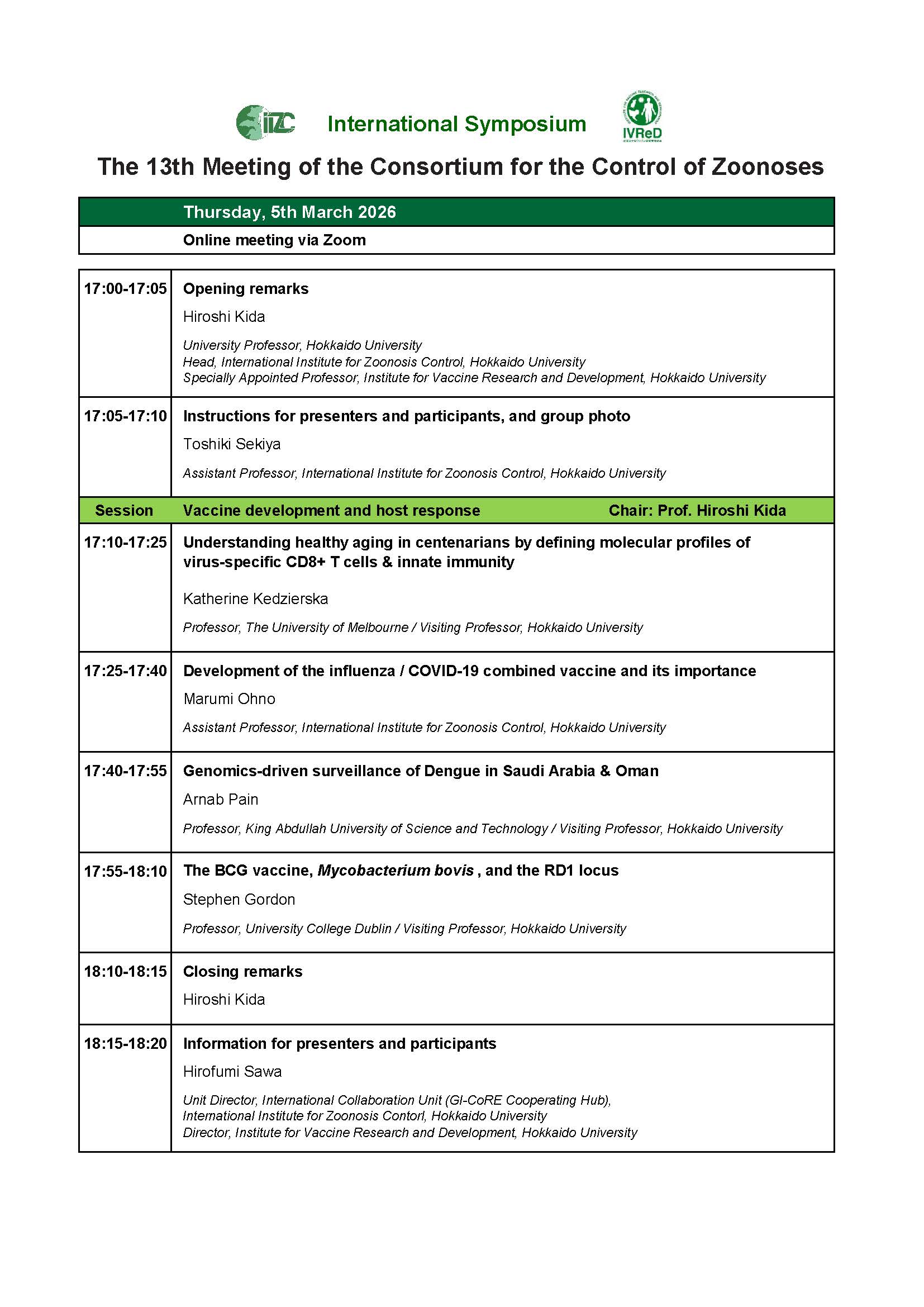
The 13th Meeting of the Consortium for the Control of Zoonoses was held online on Thursday, March 5, jointly organized by the International Institute for Zoonosis Control (IIZC) and the Institute for Vaccine Research and Development (IVReD).The conference opened with remarks by Professor Hirofumi Sawa, Director of the International Collaboration Unit (GI-CoRE Cooperating Hub) at IIZC and Director of IVReD. This was followed by presentations from four internationally renowned researchers, who discussed the latest advances and research findings in vaccine discovery and development and host responses to infectious diseases.
Professor Katherine Kezierska of the University of Melbourne presented her research analyzing immune function in children, adults, older adults, and centenarians, and reported on the identification of factors associated with healthy aging in centenarians. These findings may contribute to the discovery of potential therapeutic targets for reducing the severity of diseases. Assistant Professor Marumi Ohno of IIZC presented the importance of developing combination inactivated whole-particle vaccines and establishing a large-scale manufacturing system to control influenza and COVID-19. She emphasized the urgent need to advance these efforts. Professor Arnab Pain of King Abdullah University of Science and Technology reported his research findings on dengue fever, the incidence of which has increased in recent years in Saudi Arabia and Oman. Through analyses of serum samples from patients who tested positive, phylogenomic analyses, and mutation analyses, he demonstrated the possibility of both local transmission and cross-border introduction of the virus. These findings underscore the importance of real-time genomic surveillance. Finally, Professor Stephen Gordon of University College Dublin discussed the RD1 region, a key genetic factor involved in the attenuation of the BCG vaccine used against tuberculosis. His findings suggested that the RD1 region may not be essential for virulence or transmission in all hosts. Furthermore, he reported the identification of a Mycobacterium bovis mutant strain lacking the RD1 region, highlighting the need to reconsider the use of BCG vaccines in cattle.
Despite the time difference, the symposium attracted a large number of faculty members involved in GI-CoRE and IVReD collaborations from overseas universities. A total of 77 participants, including 38 international participants, attended the symposium, comprising researchers from IIZC, the Faculty of Veterinary Medicine, IVReD, and the One Health Research Center, as well as students from the Graduate School of Infectious Diseases. Each presentation was followed by lively questions and discussions, and the symposium concluded successfully. The symposium further strengthened collaboration between Hokkaido University and partner universities overseas and is expected to promote international collaborative research aimed at elucidating pathogen transmission routes, deepening our understanding of the mechanisms underlying pathogenicity, and developing new methods for the prevention, diagnosis, and treatment of infectious diseases.
The 13th Meeting of the Consortium for the Control of Zoonoses
Host: International Institute for Zoonosis Control and the Institute for Vaccine Research and Development
Date: Thursday, 5 March, 2026
Venue: Online Meeting via Zoom
Language: English
Poster and Program: Please click on the image to enlarge.
For details, please contact;
International Collaboration Unit, International Institute for Zoonosis Control,
Hokkaido University